
Portfolio
Find Christina’s books and translations here

Description
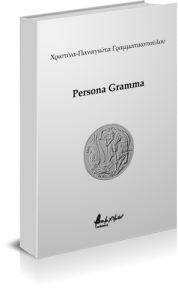
*SOLD OUT*
JUDICIAL GUARDIANSHIP
You hadn’t seen the eyes on you. The evil that was your fate could hardly exist. You didn’t realise that you were a challenge for some. You didn’t care what people thought. You didn’t appreciate the symbols. You were hitting yourself. Kicking yourself. You didn’t throw yourself at the wall. To break. As you should. Kneeling among the basil holding carved rose petals for years, dipping your tongue and face into the bowl, you didn’t think that this kind of hatred was boiling in their lungs. You were minding your own business. You loaded your brain with diverse knowledge. A snake alloy on a staff, balance on the scales—titles and capacities—a presidential signature. What is an MRI supposed to do, what are the biopsies supposed to say, the bones were bowed from the tonnes; your legs got a headache.

Description
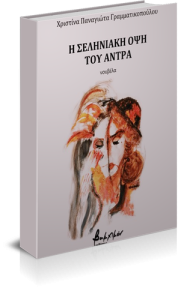
*SOLD OUT*
Thomi and Chrysa. Two everyday women from Thessaloniki. Framed by family, friends, colleagues and lovers. They struggle—each in her own microcosm, each in her own way. They struggle with the others, their circumstances, their problems and themselves—with their fatigue, their traumas, their memories. Until the full moon leads them to find healing…
Novella Praise by the Club UNESCO Greece for Arts, Literature and Science 2017

Description
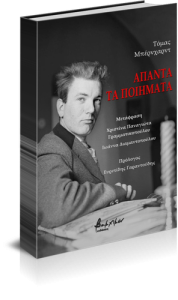
Thomas Bernhard (1931–1989) is known, in Greece as well as internationally, primarily as a prose writer and secondarily as a dramatist. He has, however, one more writer’s mantle, that of the poet, which is the most obscure. This side of his becomes known for the first time in Greece thanks to the present edition-translation of his entire poetic work.
As a poet he evolved through time, approaching more and more this psyche and stance towards life, himself and other people, that we know from his prose, what we can generally call negativism.

Description
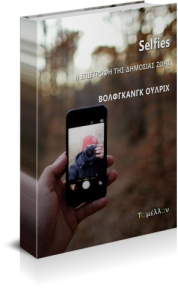
Why did selfies succeed to become the most successful image genre in social media to this day? What is their analogy with a self-portrait and self-direction?
Wolfgang Ullrich believes selfies to be the first form of a democratised and globalised civilisation of images. By means of digitisation, images have increased in number and acquired a huge importance. The fact that they are more easily created, dispersed and shared faster than in the past, does not only lead to a certain “flood of images”, it also ascribes more functions to the images.
For the first time, people can exchange opinions through images, just as they can through oral or written speech. The long time heralded “virtual turn” has become a reality.

Description
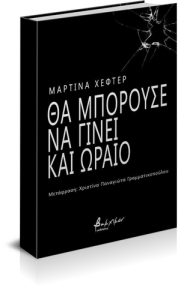
In the German-speaking linguistic space, Martina Hefter, born in 1965, has adopted something of a pioneering role. In her new poetry collection, It could also become nice, based on her own experience with a case in her family, she describes the everyday life and atmosphere of a nursing home. Or rather: she seeks and finds poetic means of expression for the inevitable, the supposedly unspeakable, which most of us fear and therefore pretend it doesn’t exist.
One particularity of the book emerges from the fact that some of the poems (or part of the single long poem, depending on your perspective) are meant to be texts for the stage. Because Martina Hefter, who comes from the Allgäu region and lives in Leipzig since the 1990s, and who published three novels before her four books of poetry, is not only a writer but also a dancer who works at the intersection between movement and language, performing her poetry.

Description
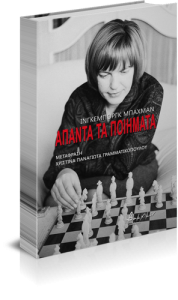
Ingeborg Bachmann’s poems correspond to the kind of humble, everyday life. Although they draw on historical memory, they nevertheless never stray far from the most contemporary, human geography. One could claim that this great creator achieves something most coveted: She gives voice to the forms that only art can. A voice that sings and praises, without any bitterness, a prayer for the guardian angel of human life. A poetry that attempts to heal the deformation of an entire landscape, which in Ingeborg Bachmann’s eyes is in danger under the cowardly, Spanish light, among the many dead fighters without a dream, forever removed from love, the stars, the moonlight, and the rituals of simple and pure life.
This is the first time that the entire poetic works of Ingeborg Bachmann have been translated into Greek.

Description
Considered amongst “the middle generation” of German-language poets, Tom Schulz—who was born in Upper Lusatia in 1970 and grew up in East Berlin—belongs to a group of writers that favour a poetry of stories over experimental verse. This makes his lyrical productions particularly suitable for translation, although those tasked with transporting his lines into a new idiom will still face sufficient challenges, both linguistically and creatively. Schulz translates poetry himself, and also regularly writes travel essays. These often have the feel of prose variations of the stories he tells in poet form. Journeys of discovery in Europe and across the globe deliver the raw materials for the poems, as do his GDR childhood and disparate aspects of reality in reunified Germany.

Description
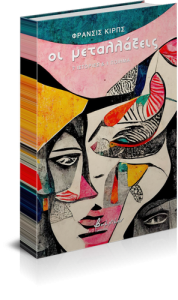
The fly Leon Sumsa wakes up one morning and finds himself transformed into a “monstrous vertebrate”, that is, a human. Kurt Tucholsky’s satire lion mutates into a polar bear who discovers fashionable Berlin. The model for the Aphrodite statue from Prosper Mérimée’s story works as a young slave in a “business” that shows surprising analogies to today’s working world. A story by Kleist is transported into the future, where the last remaining four humans fight each other. Ingeborg Bachmann’s poem intersects with H. P. Lovecraft’s fictional world resulting in a poem that, curiously, sounds like Gottfried Benn.
The Mutations are seven stories and one poem, each using as model and reference point a classical text—from Little Red Riding Hood to Virginia Woolf.
European Union Prize for Literature 2020

Description
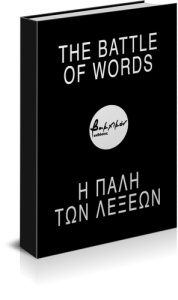
On the occasion of Poetry Expo 23 and in collaboration with the Expo team, we created the project The battle of words, with a small and targeted poetry collection about war, social injustice, domestic violence, gender violence, police violence… every form of violence, but also racism, exile, corruption in politics, political indifference, hunger, refugees, and fighting for a better future. The collection includes poems by 24 poets and poetesses with a social gaze, societal criticism, and indictment of society.

Description
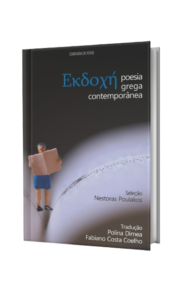
This anthology brings together fifty notable, distinguished, and renowned poets, capturing the range of contemporary poetry in Greece and highlighting the polyphony that dominates various trends in the country's poetic reality.

Description
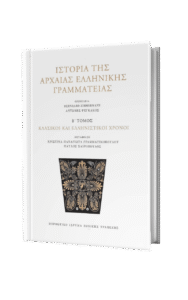
Johann Gustav Droysen has described the Hellenistic period as "the modern period of antiquity." Such a characterization rightly raises doubts as to its precise meaning and accuracy. However, there is no doubt that today's era, with its rapid pace of globalization, has a keen sense of how to characterize and evaluate the Hellenistic period. Traditionally—and this also dates back to Droysen's time—the Hellenistic period was interpreted as a time of ecumenism and universalism, while its basic characteristics were understood to be the synthesis and fusion of cultures. Experts spoke of syncretism or syncretisms and could well have used the term melting pot.
The enrichment of our source material from the Hellenistic period and, above all, the – initially delayed – investigation of testimonies from the respective indigenous, i.e. non-Greek, environments (including the presentation of newly discovered or, for the first time, edited, translated, and annotated material, such as texts in cuneiform script or demotic papyri) provided increasing grounds for revising traditional perceptions and for differentiated perspectives.
This leads to a certain basic assessment of the period: the Hellenistic period was neither a period of unifying fusion between Greek and Eastern Egyptian civilization, nor a period of simple superimposition of Greek civilization on the respective indigenous civilizations. Instead, it should be understood as an amalgam of various processes of rapprochement and appropriation, encounter and contact, resistance and rejection.
News subscription
Follow Christina’s news
Written about Christina
Critics on Christina–Panagiota Grammatikopoulou’s works of poetry and prose.

Persona Gramma is a distinct, wholehearted poetic statement; bold, with a high standard of social and political perception.

It‘s a voice hungering to be heard. Hungering to give dimensions and shape to its rage.

A captivating text that kept my full attention up to its last line.
(About Man’s lunar look).

Poetess, Writer and Translator
Contact
Vakxikon Publications, Veranzerou Str. 13, GR- Athens 106 77
Phone : 210 3637867
Copyright © 2022 John Demiris All Rights Reserved